About
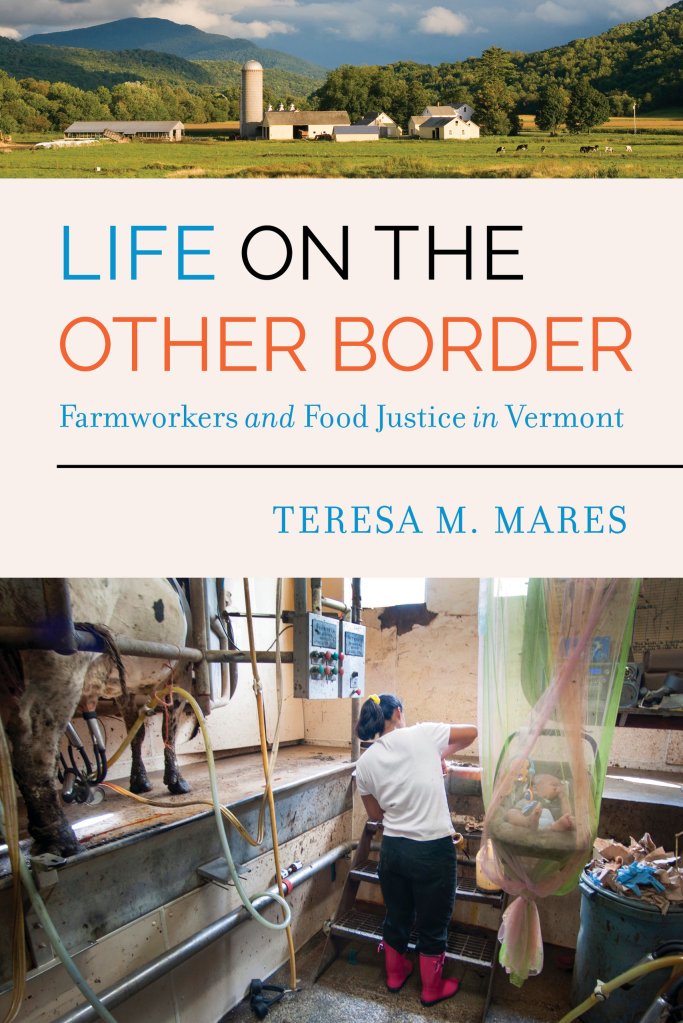
In Life on the Other Border Teresa M. Mares explores the intersections of structural vulnerability and food insecurity experienced by migrant farmworkers in the northeastern borderlands of the United States. Through ethnographic portraits of Latinx farmworkers who labor in Vermont’s dairy industry, Mares powerfully illuminates the complex and resilient ways workers sustain themselves and their families while also serving as the backbone of the state’s agricultural economy. In doing so, Life on the Other Border exposes how broader movements for food justice and labor rights play out in the agricultural sector, and powerfully points to the misaligned agriculture and immigration policies impacting our food system today.
Reviews
“Mares’s book contributes enormously to the fields of critical ethnography, borderland studies, and immigration studies, and would be an excellent addition to any classroom or public discussion of labor rights and food justice.”— Gastronomica
“[Mares] successfully conveys the importance and value that agricultural laborers bring to our food system, and how their identities are often erased from the consumer experience further down the value chain.”— Journal of Agriculture, Food Systems, and Community Development
“Mares reveals the multiple borders that Vermont immigrants contend with, applying border theory well beyond the familiar US–Mexico border. Life on the Other Border will be a revelation to many readers who think that border surveillance primarily affects the US–Mexico borderlands or who associate Vermont with a bucolic landscape full of family farmers and happy cows. Ultimately, she shows how Latinx immigrants have suffered for the dairy industry and why, against all odds, they have become the new leaders of farm worker justice in the United States.”––Matt Garcia, author of From the Jaws of Victory: The Triumph and Tragedy of Cesar Chavez and the Farm Worker Movement
“This book breaks new ground by examining the intersections of the global food system, migration, gender, and food practices of resistance and resilience among Mexican and Central American farmworkers in Vermont. Most are undocumented workers and have to contend with their proximity to the Canadian border and the dangers of being arrested or even deported. This is a timely and highly significant ethnography.”––Ellen Oxfeld, author of Bitter and Sweet: Food, Meaning, and Modernity in Rural China
 Teresa Mares, PhD